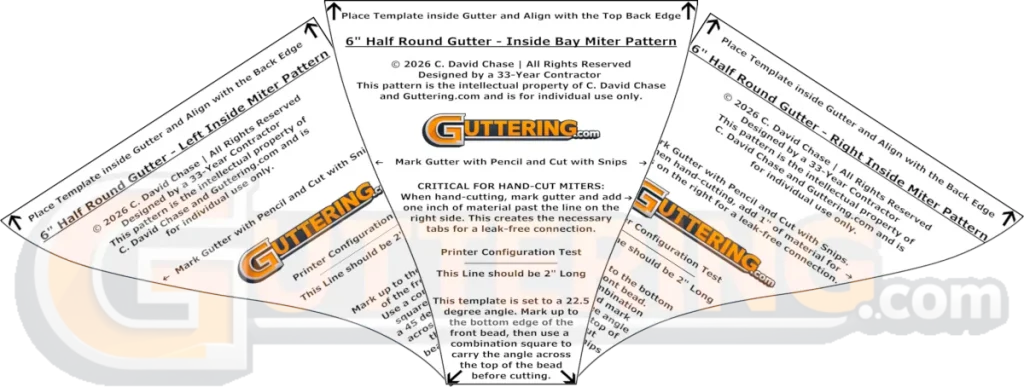
Water is patient. It will find every gap, every improper pitch, every failed sealant joint, and it will exploit them for years before you notice the damage. Roughly 98% of basements in the United States experience some form of water intrusion over their lifetime, and a significant share of those problems trace directly back to failed or improperly installed guttering. That is not a small problem. That is a foundation problem, a rot problem, a costly-repair problem. The professional guides coming soon on Guttering.com exist for one reason: to stop that damage before it starts, using the same field-tested methods I have relied on for over three decades in the trades.
My name is C. David Chase. I have been diagnosing water intrusion and installing contractor-grade guttering systems since the mid-1990s. This site is where that experience lands, not in vague, generic home-improvement language, but in precise, actionable trade knowledge built from real jobs on real rooflines.
Key Takeaways
- Guttering.com is building a comprehensive contractor’s resource library, professional guides coming soon across installation, diagnostics, and material selection.
- Every product recommendation on this site is field-tested by an active contractor with 31 years of hands-on experience.
- The content focuses on root-cause diagnostics first, then practical fixes, not generic advice written by someone who has never held a crimper.
- C. David Chase operates as an Amazon Associate; product links support the site at no extra cost to you.
- The Contractor’s Toolbox will cover everything from proper layout math to long-term durability strategies for residential drainage systems.

What the Contractor’s Toolbox Actually Covers
Most home-improvement content about guttering is written at 30,000 feet. It tells you to “make sure your gutters are properly sloped” without telling you what proper slope actually means in inches per linear foot, or how to calculate it across a 60-foot run with a mid-span outlet. That is the gap I am filling here.
The Contractor’s Toolbox is the resource library I wish my own customers had before they called me. It is organized around the problems I see most often in the field, and the solutions that actually hold up over time.
What You Will Find in the Guides
Here is a breakdown of the core content categories being built out:
| Content Category | What It Covers |
|---|---|
| Gutter Guard Reviews | Field-tested performance across micro-mesh, reverse-curve, and foam insert styles |
| DIY Installation Guides | Step-by-step layout math, hanger spacing, pitch calculations, and outlet placement |
| Miter and Corner Work | Proper sealant prep, thermal expansion allowances, and leak-proof joint techniques |
| Material Performance | Aluminum vs. steel vs. vinyl, real-world durability data, not manufacturer claims |
| Diagnostic Troubleshooting | Root-cause analysis for sagging runs, leaking joints, overflow events, and foundation washouts |
| Preventative Maintenance | Seasonal inspection checklists and long-term durability protocols |
| Tool Selection | Specific tool recommendations including the Malco End Cap Crimper and other contractor-grade equipment |
Every single one of these categories is built around a diagnostic approach. Before I tell you how to fix a leaking half-round miter, I will tell you exactly why it is leaking, thermal expansion cycling, improper sealant prep, wrong product for the substrate. Understanding the root cause is what separates a permanent fix from a patch job that fails in two seasons.
The Field-Testing Standard
I do not recommend products I have not used on actual jobs. That includes the tools, the sealants, the gutter guard systems, and the fasteners. When I reference the Malco End Cap Crimper, it is because I have run that tool on dozens of jobs and I know how it performs under field conditions, not because a manufacturer sent me a sample.
As an Amazon Associate, I earn a commission from qualifying purchases made through links on this site. That comes at zero extra cost to you, and it helps keep the content free and independent. My recommendations do not change based on commission rates. If a product does not perform, I will tell you that too.
“After 31 years in the trades, the most expensive mistake I see homeowners make is not the wrong product, it is the wrong installation. Proper water diversion is a math problem before it is a materials problem.”
, C. David Chase
Professional Guides Coming Soon, Here Is What to Expect
The site is actively being built out in 2026. The professional guides coming soon are not filler content. Each one is being drafted from field notes, job-site documentation, and hands-on diagnostic experience accumulated over 31 years in the trades. Here is what that looks like in practice.
Deep-Dive Installation Breakdowns
A proper seamless gutter installation involves more variables than most DIY resources acknowledge. Hanger spacing changes based on roof pitch and regional snow load. Outlet placement affects drainage velocity and debris accumulation patterns. Downspout sizing is not one-size-fits-all, a 2×3 downspout draining a 200-square-foot roof section performs very differently than one draining 600 square feet.
The installation guides on this site will cover:
- Proper layout math, calculating pitch, run length, and outlet placement before a single hanger goes up
- Hanger selection and spacing, hidden hangers vs. spike-and-ferrule, structural fastener specs, and spacing adjustments for high-load conditions
- End cap and miter work, step-by-step sealant application with specific product recommendations and cure time requirements
- Downspout sizing and placement, matching outlet diameter to drainage area using real-world flow rate data
- Flashing integration, how guttering interacts with drip edge and fascia board to prevent water intrusion at the roofline
Real-World Troubleshooting Guides
This is where the 31 years of hands-on experience shows up most clearly. Troubleshooting a sagging gutter run is not the same as troubleshooting an overflow event, even though both produce water in the wrong place. The diagnostic approach matters.
Each troubleshooting guide will follow a consistent structure:
- Symptom identification, what you are seeing and where
- Root cause analysis, the structural or material failure driving the symptom
- Tool and material requirements, specific products, not generic categories
- Step-by-step repair sequence, in the order a contractor would actually execute it
- Preventative follow-up, what to check or adjust to prevent recurrence
Gutter Guard Reviews You Can Actually Use
The gutter guard market is flooded with products that perform well in marketing videos and poorly in actual rainfall events. I have installed and removed enough of them to give you a straight answer on what works, what fails, and why. The reviews coming to this site will cover material performance across real debris loads, pine needles, seed pods, shingle grit, not just controlled test conditions.
Stay Connected, The Vault Opens Soon
The professional guides coming soon on Guttering.com represent a genuine knowledge transfer from the top of the ladder to your hands. This is not a content farm. It is one contractor’s accumulated field knowledge, organized for homeowners and DIYers who are done wasting time on advice that does not hold up under real conditions.
If you are dealing with a specific problem right now, a leaking corner, a sagging run, a foundation washout you cannot trace, the content being built here will give you the diagnostic framework to identify the root cause and the step-by-step guidance to fix it right the first time.
Conclusion
Guttering failures are not random. They follow patterns, thermal expansion at unsealed miters, hanger fatigue from improper spacing, overflow from undersized outlets. After 31 years in the trades, I have seen every variation of those patterns, and I know exactly how to address them.
Guttering.com is being built to give you that same diagnostic clarity. The professional guides coming soon will cover installation, troubleshooting, material selection, and preventative maintenance at a level of technical depth you will not find in generic home-improvement content.
Here are your next steps:
- Bookmark this site and check back regularly as new guides are published in 2026.
- If you have a specific guttering problem you are troubleshooting right now, note the symptom, the location, and when it started, that diagnostic information will help you use the guides effectively when they go live.
- Review any product links on the site knowing that every recommendation is field-tested and backed by real-world contracting experience.
The resource I wish my own customers had is almost ready. Real-world advice from someone who has been on the ladder, not just writing about it.