Stop Water Damage Before It Starts.

Hi, I’m C. David Chase. After 31 years in the guttering business, I have seen every way a gutter system can fail — and every way it can be built to last.
Sagging runs, leaking miters, basement floods traced back to a single misplaced downspout, and gutter guard products that failed exactly the way their marketing said they would not.
I built guttering.com to be the resource I wish my customers had before they called me — contractor-grade technical guidance written for anyone serious enough to want to understand the system they are working on, not just follow a generic checklist.
Why Guttering Fails — And Why It Matters
A gutter system has one job: collect water off the roof surface and move it far enough from the structure that it cannot work its way back in. When that sequence breaks down — at the miter joint, the hanger, the outlet, or the downspout discharge point — the consequences compound quietly for months or years before they become visible from the ground.
The financial stakes are not minor. Foundation repairs range from $5,000 to $50,000 depending on severity. Fascia and soffit replacement on a full residential run regularly exceeds $3,000 to $8,000. Basement waterproofing, once water has been pooling against a foundation through multiple seasons, starts at $10,000.
Every one of those repair bills traces back to a guttering system that was either installed incorrectly, maintained poorly, or left to fail without intervention. Gutters are one of the most manageable exterior systems on a home — when you understand how they work, what causes them to fail, and how to fix or upgrade them correctly.
Where Are You in Your Guttering Project?
🛠️ DIY Installation Guides
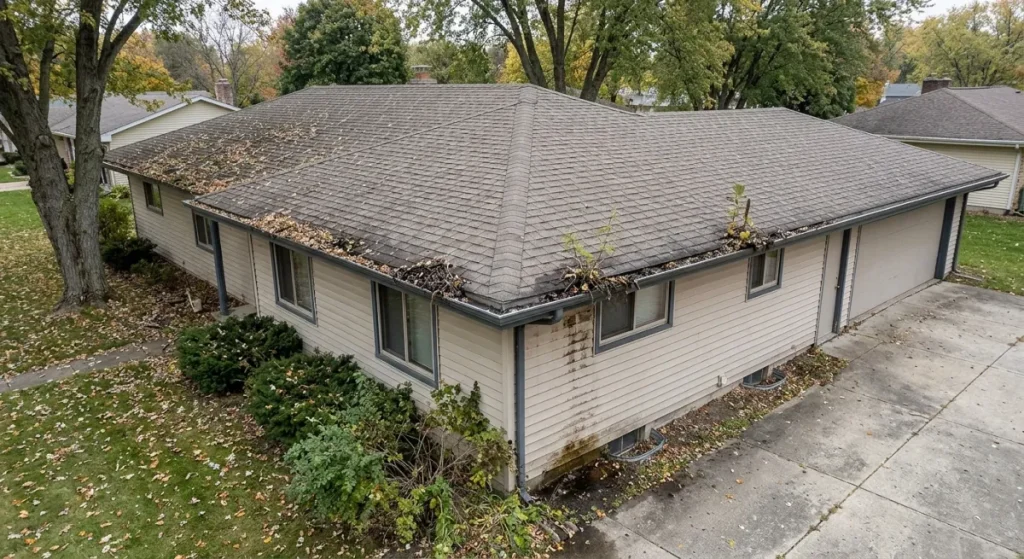
Installing a new guttering system — or replacing a failed one — is a manageable project when you understand the layout math, material options, and fastener requirements before the first hanger goes in.
The installation guides on this site cover the complete process from initial measurement to final downspout placement, written to the standard applied on production residential work for over three decades.
- Pitch calculation for single-outlet and dual-outlet runs — including the long-run slope math that prevents the high end from being visually obvious from the ground
- Hanger type and spacing by material, gutter profile, and climate zone — including load considerations for regions with heavy ice or sustained wind exposure
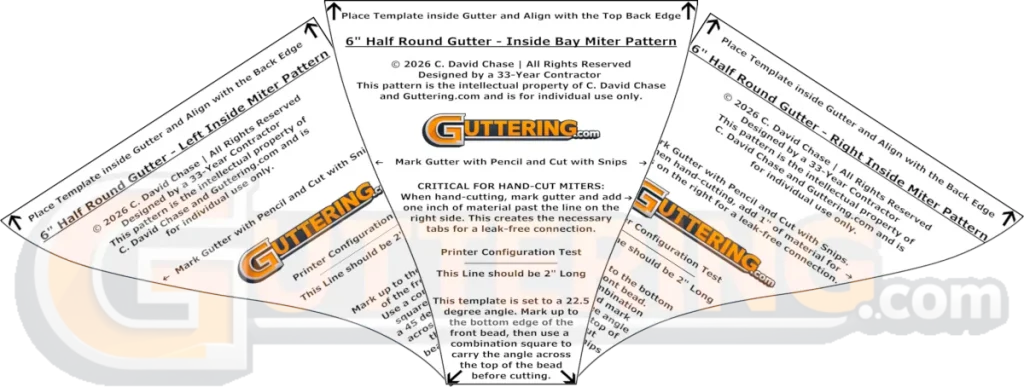
- Miter cutting and fitting for inside and outside corners on K-style and half-round profiles — including the 22.5-degree bay window geometry that most installers get wrong
- Downspout sizing and placement for correct drainage load management — including the outlet tube sizing math that prevents overflow on high-volume roof sections
- Seamless versus sectional trade-offs — the honest assessment of where sectional systems are adequate and where they are not
Browse the DIY Installation Guides →
🔎 Gutter Guard Reviews
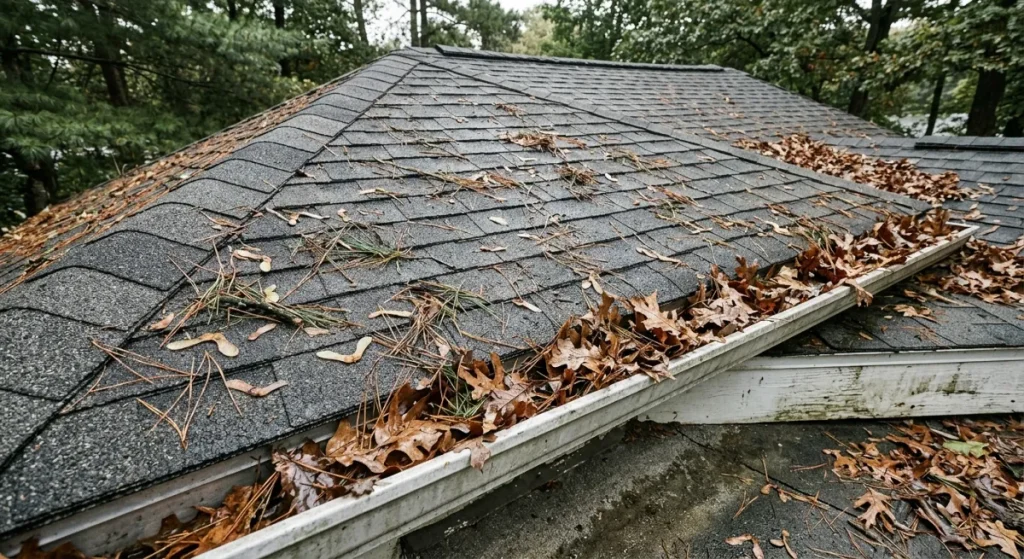
The gutter guard market is one of the most aggressively marketed product categories in the home improvement industry. High-pressure sales presentations, lifetime warranties written with enough exclusions to be nearly unenforceable, and performance claims that hold up only under ideal conditions are standard practice.
The reviews on this site cut through all of it. Every product is evaluated on one standard: does it actually keep the gutters clear under the debris load and weather conditions it claims to handle?
- Performance by debris type — pine needles, maple seeds, shingle grit, and fine sediment each expose different failure modes in different guard types
- Roof warranty impact analysis — which systems void manufacturer shingle warranties and what the warranty language actually says before you sign a contract
- Structural longevity — which products hold their shape and attachment over multiple seasons under real weather exposure and which do not
- Installation difficulty ratings — which systems are genuinely DIY-accessible and which require professional installation to perform as advertised
- Honest failure documentation — where each product falls short under real conditions, not just where the manufacturer claims it performs well
Browse the Gutter Guard Reviews →
💧 Repair and Maintenance Guides

Most gutter failures do not require full system replacement. A leaking miter joint, a section that has lost its pitch, a downspout separated from its outlet — these are afternoon repairs when you know the correct diagnosis and the right fix for the actual failure point.
The repair guides on this site start with the root cause, not the symptom, and walk through the correct fix sequence with the same specificity as the installation guides.
- Leak diagnosis by location — miter joints, end caps, outlet tubes, and seam splits each have distinct causes and distinct correct repairs that address the failure mechanism rather than masking it
- Sealant selection by substrate — what bonds correctly to aluminum, copper, and galvanized steel through freeze-thaw cycling and what fails within a season regardless of application quality
- Pitch correction and re-hanging for runs that have settled, shifted off slope, or were installed incorrectly from the start
- Hanger replacement and fascia inspection — the protocol that determines whether new fasteners will hold or whether the underlying wood must be addressed before re-hanging
- Seasonal preventative maintenance by climate zone — what to inspect, what to clean, and what to address before the first freeze of the season
Browse the Repair and Maintenance Guides →
The Diagnostic Standard Behind Every Guide
Every guide on this site follows the same framework applied on every job site for 31 years: identify the root cause before proposing the fix.
For our technical layout specs and system configurations, we align our guides with the engineering standards established by the Sheet Metal and Air Conditioning Contractors’ National Association (SMACNA). By referencing these rigorous national benchmarks for architectural sheet metal fabrication, we ensure every calculation for pitch, metal thickness, and structural load capacity meets absolute professional-grade criteria.
A leaking miter joint is not simply a sealant problem. It is either a fitting problem, a surface preparation problem, a sealant selection problem, or a thermal movement problem — and each of those root causes requires a different correct response. Applying more sealant to a joint that does not seat properly does not fix the joint. It delays the callback by one season.
This diagnostic discipline is what separates the content on guttering.com from general home improvement advice. General advice tells you what to do.
Contractor-grade guidance tells you why the failure happened, what the correct fix addresses, and what the wrong fix misses. That distinction is the difference between a repair that lasts and one that fails again before the warranty on the sealant tube expires.
Frequently Asked Questions
What is the correct pitch for a residential gutter run?
The standard pitch is 1/4 inch of drop per 10 linear feet of run, sloping toward the downspout outlet. On runs longer than 40 feet, pitch from both ends toward a center outlet — or from the center toward outlets at each end — to prevent a visible slope from the ground.
How often should gutters be cleaned?
In most climates, twice per year — once in late spring after tree pollination and seed drop, and once in late fall after leaf drop is complete. Properties with heavy pine tree coverage may require three to four cleanings per year due to continuous needle shed. A gutter guard system reduces but does not eliminate this schedule.
What is the difference between K-style and half-round gutter?
K-style gutters have a flat back and a decorative ogee profile on the front face. They carry more water volume per inch of width than half-round gutter and are the standard profile for production residential construction. Half-round is a semicircular trough profile used primarily on high-end custom homes, historical restorations, and copper installations. Half-round requires more precise miter fabrication at corners but sheds debris more cleanly than K-style under heavy leaf load.
What causes gutter to pull away from the fascia?
The most common cause is hanger failure — either the original hangers were spaced too far apart, the wrong hanger type was used for the material and climate, or the fasteners were driven into rotted fascia wood that can no longer hold the load. In cold climates, ice loading in a clogged gutter can exceed the pull-out strength of the original fasteners. Both scenarios require fascia inspection and repair before re-hanging — driving new fasteners into the same rotted wood produces the same failure on the same timeline.
The Network Behind This Site
Guttering.com is the flagship of a three-domain resource network, each domain serving a distinct audience under the same editorial standard — field-accurate, contractor-written, and editorially independent from manufacturer influence and commission-driven recommendations.
- Guttering.com — Installation guides, guard reviews, and repair content for homeowners, DIYers, and property managers at all experience levels
- Guttering.net — Advanced technical content, regional climate-specific installation guidance, and professional trade resources for licensed contractors and crew leads
- Guttering.org — Drainage calculation data, engineering principles, and code compliance references for architects, engineers, and facilities management professionals