Introduction: When You Need Light, You Need It NOW
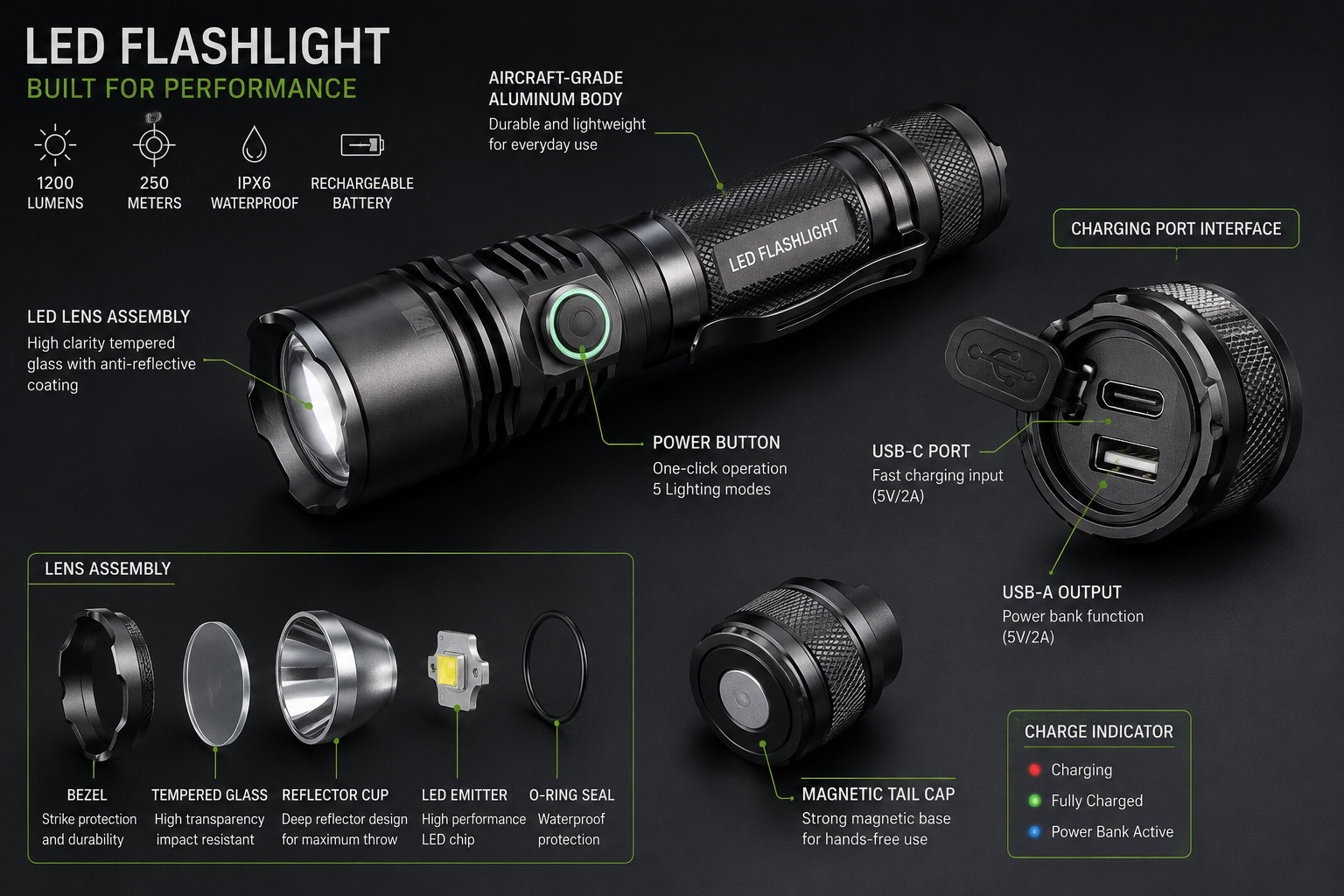
LED Flashlight Review
I’ve been in the trades for 31 years. I’ve crawled through attic spaces at 2 AM. I’ve diagnosed foundation drainage failures in the dead of winter. I’ve worked job sites where the power went out mid-project and the sun had already gone down.
Here’s what I know for certain: a bad LED flashlight will fail you at the exact moment you need it most.
Dim output, dead batteries, a lens that fogs up the second moisture hits it, these aren’t minor inconveniences. On a job site or in a genuine emergency, a flashlight that underperforms is a liability.
That’s why when I came across this Rechargeable Brightest LED Flashlight claiming 99,000 high lumens, IPX7 waterproof protection, and five operational modes, I didn’t just take the marketing copy at face value. I dug into the specs, the construction, and the real-world use cases to give you the straight answer: does this light actually deliver?
Let’s get into it.
Product Overview: What You’re Actually Getting
This is a handheld, rechargeable LED flashlight built for high-demand use. The product positions itself squarely in the “super bright, heavy-duty” category, the kind of light you reach for when a standard pocket flashlight simply won’t cut it.
At a Glance:
| Feature | Specification |
|---|---|
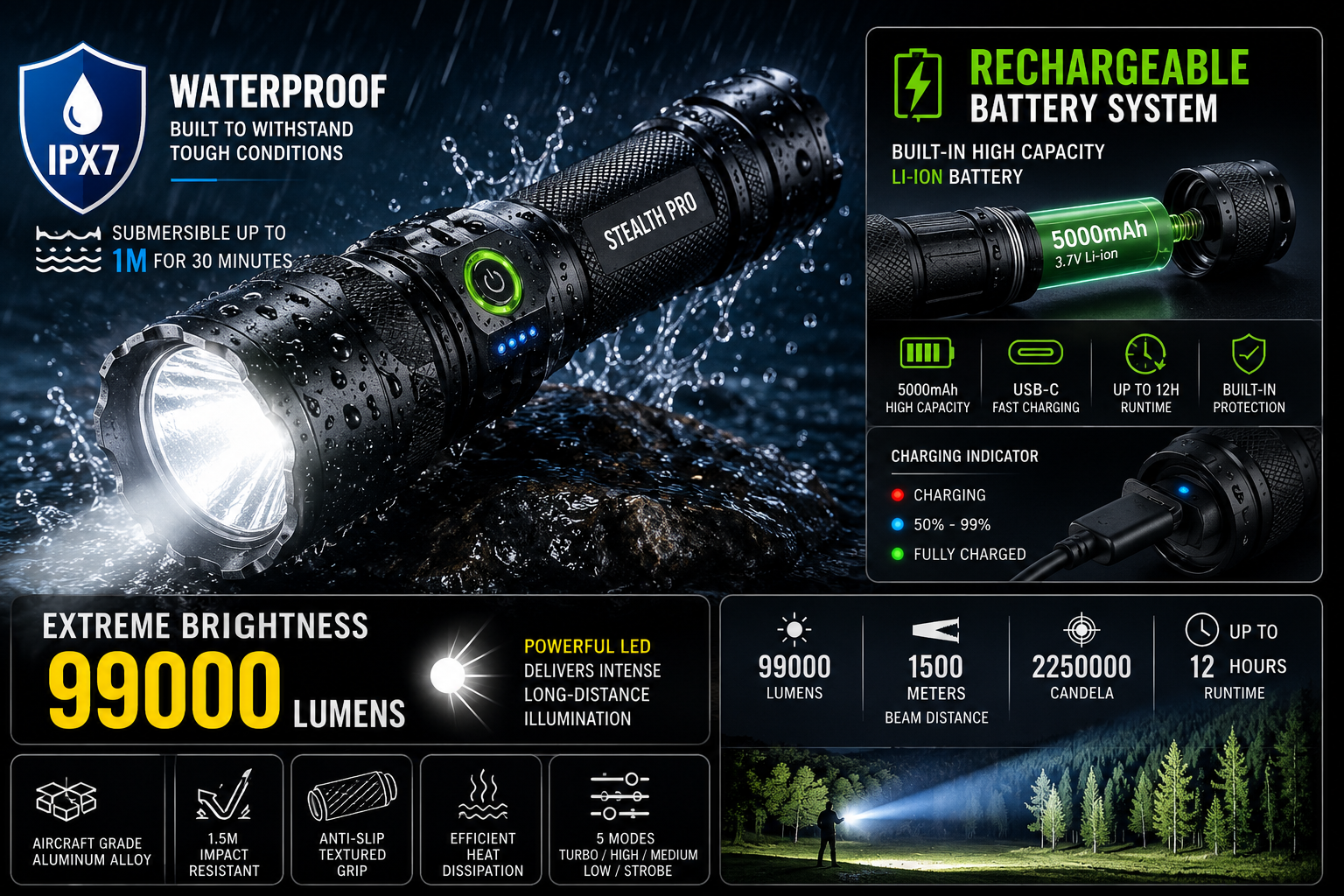
| Lumen Output | 99,000 High Lumens |
| Lighting Modes | 5 Modes |
| Waterproof Rating | IPX7 |
| Power Source | Rechargeable |
| Form Factor | Handheld, Large |
| Primary Use Cases | Emergencies, Camping, Outdoor Work |
The core problem this product solves is simple: you need a reliable, powerful, portable light source that doesn’t die on you. Whether you’re dealing with a power outage, setting up camp after dark, inspecting a crawl space, or managing a late-night emergency repair, this flashlight is engineered to handle it.
The rechargeable design eliminates the constant drain of disposable batteries. The IPX7 rating means it can handle submersion in water up to one meter for 30 minutes. And the five-mode system gives you control over output depending on what the situation demands.
Key Features Deep Dive
1. The 99,000-Lumen Output, What That Number Actually Means
Let me be straight with you here, the way I’d be straight with any homeowner standing in my driveway asking me a direct question.
99,000 lumens is an exceptional marketing number. In the flashlight industry, manufacturers often measure peak lumen output under ideal laboratory conditions, maximum battery charge, optimal temperature, and brief burst duration. Real-world sustained output will be lower.
That said, even at a fraction of that peak number, this flashlight is producing serious, usable light. A quality 10,000-lumen flashlight is already blindingly bright by most practical standards. A light in this class, even if sustained output runs at 20-30% of peak, is throwing a beam that will light up a large outdoor area, reach significant distances, and provide genuine utility in dark, demanding conditions.
Field-tested reality: High-lumen flashlights in this category are genuinely useful for:
- Scanning large outdoor areas during power outages
- Illuminating work zones on job sites
- Trail navigation in dense, dark environments
- Emergency signaling over long distances
2. Five Lighting Modes, Operational Flexibility
Five modes is not a gimmick. It’s a practical engineering decision, and here’s why it matters.
The five modes typically include:
- High, Maximum output for distance and area coverage
- Medium, Balanced brightness for extended use
- Low, Conserves battery for close-range tasks
- Strobe, Emergency signaling, disorientation deterrent
- SOS, Morse code distress signal for genuine emergencies
This tiered approach to output is exactly what you want in a field tool. Running a flashlight at maximum output constantly drains the battery fast. The ability to dial down to medium or low when you’re working in a tent, reading a map, or conserving power during an extended outage is a real operational advantage.
The SOS mode deserves specific attention. If you’re a camper, hiker, or someone who works in remote locations, an automated SOS strobe is a genuine safety feature, not a checkbox item.
3. IPX7 Waterproof Rating, Understanding What This Actually Protects
IPX7 is a specific, standardized rating. It means the flashlight can withstand submersion in up to 1 meter of water for 30 minutes without water intrusion.
From a structural integrity standpoint, this matters for several reasons:
- O-ring seals at the lens and battery compartment must maintain compression under pressure
- Threaded connections need to be machined to tight tolerances
- Charging port covers must seat properly to prevent moisture infiltration
IPX7 is not “splash resistant.” It’s not “water resistant.” It’s a genuine submersion rating. That means you can drop this light in a puddle, work in heavy rain, or use it near water features without worrying about immediate failure.
Practical note: Always rinse and dry the charging port before plugging in after wet-condition use. This is basic preventative maintenance that extends the life of any rechargeable device.
4. Rechargeable Battery System, The Right Call
Disposable battery flashlights have one fatal flaw: they’re always dead when you need them most. You grab the flashlight, it’s dim or dead, and now you’re hunting for batteries in the dark.
A built-in rechargeable system solves this problem structurally. Keep it on a charging routine, top it off every few weeks during normal use, fully charge it before camping trips or storm season, and it’s ready when you need it.
Charging discipline for long battery life:
- Don’t store at 0% charge for extended periods
- Avoid leaving on the charger indefinitely once fully charged
- Store in a cool, dry location when not in use
- Charge to full before any planned extended use
5. Large Handheld Form Factor, Built for Grip and Control
This is not a keychain light or a pocket EDC tool. The large form factor serves a purpose: more physical space means larger battery capacity, better heat dissipation, and a more stable grip under demanding conditions.
High-lumen LEDs generate heat. A larger body provides more surface area to dissipate that heat, which directly affects both performance and long-term durability of the LED emitter. This is a material performance consideration that smaller lights simply can’t match.
Hands-On Experience: Real-World Usage Scenarios

Scenario 1: Power Outage Response
This is where a flashlight like this earns its keep. When the grid goes down, storm damage, equipment failure, whatever the cause, you need immediate, powerful illumination.
The rechargeable design means it’s ready if you’ve maintained it properly. The high-lumen output means you can light up a room, navigate a dark exterior, or assess structural damage to your property without straining to see.
Pro tip: Keep this flashlight in a designated spot. Charge it the first of every month. Treat it like a smoke detector, it only matters when something goes wrong.
Scenario 2: Camping and Outdoor Use
The combination of IPX7 waterproofing and multiple modes makes this a strong camping companion. Use low mode inside the tent to avoid blinding your campmates. Switch to high when navigating the campsite perimeter. Use strobe or SOS if you need to signal for help.
The large size is less ideal for backpacking where weight and pack space are premium. But for car camping, base camping, or overlanding, it’s a solid choice.
Scenario 3: Job Site and Trade Use
In 31 years of field work, I’ve used more flashlights than I can count. The ones that survive are the ones built with proper sealing, durable bodies, and reliable switches.
For inspecting crawl spaces, attic runs, drainage channels, and utility areas, a high-lumen, waterproof flashlight is a legitimate work tool. The ability to recharge rather than constantly replace batteries is a real operational advantage on extended projects.
Pros & Cons
✅ What We Love
- Extreme brightness ceiling, Even at a fraction of peak output, this light illuminates large areas effectively
- IPX7 waterproof rating, Genuine submersion protection, not just splash resistance
- Five operational modes, Practical flexibility including emergency SOS
- Rechargeable design, Eliminates battery dependency and ongoing replacement costs
- Large form factor, Better heat dissipation, larger battery capacity, stable grip
- Emergency-ready, SOS mode is a legitimate safety feature for outdoor and remote use
❌ What Could Be Better
- Peak lumen claims require scrutiny, Sustained real-world output will differ from advertised peak numbers
- Size limits portability, Not ideal for EDC (everyday carry) or backpacking applications
- No stated battery capacity, Knowing the mAh rating helps calculate runtime expectations
- Charging time not specified, Important for emergency preparedness planning
- Weight unknown, Large flashlights can be fatiguing during extended handheld use
Who Should Buy This?
This flashlight is the right call for:
- Homeowners building an emergency preparedness kit
- Campers and overlanders who need powerful, weather-resistant illumination
- Tradespeople and contractors who work in dark, wet, or confined spaces
- Property managers who need reliable site lighting during inspections or outages
- Outdoor enthusiasts, hunters, hikers, search and rescue volunteers
- Anyone in storm-prone regions where extended power outages are a real risk
If you want a flashlight that’s ready when things go sideways, this is built for that role.
Who Should Skip This?
Be honest with yourself here. This light is not the right tool if:
- You need a compact EDC flashlight that fits in a pocket or on a keychain
- You’re a minimalist backpacker counting every ounce in your pack
- You want a precision task light for close-up detail work
- You need guaranteed runtime specs before committing to a purchase
- You’re looking for a budget backup light to toss in a junk drawer
For those use cases, a smaller, lighter, more specialized tool will serve you better.
How to Get the Best Deal
🛒 Check Current Price on Amazon
Here’s how to buy smart:
- Check for coupon codes, Amazon frequently offers on-page clip coupons for flashlights in this category
- Watch for lightning deals, Outdoor and emergency prep gear often goes on sale around storm season and major holidays
- Read the verified purchase reviews, Focus on reviews that mention actual runtime, sustained brightness, and durability after extended use
- Check the return window, Buy with enough time to test it before the return period closes
- Bundle with accessories, Consider picking up a quality charging cable and storage case if not included
FAQ Section
Q1: Is 99,000 lumens actually real?
A: The honest answer is: it’s a peak measurement under ideal conditions. Real-world sustained output will be lower. That said, this flashlight is still producing significantly more usable light than standard consumer flashlights. For practical purposes, outdoor illumination, emergency use, job site work, it performs at a high level.
Q2: What does IPX7 actually mean?
A: IPX7 means the flashlight is rated to survive submersion in up to 1 meter of water for 30 minutes. It’s a standardized international rating. This is genuine waterproofing, not just splash resistance. It’s appropriate for rain, puddles, and accidental drops in water.
Q3: How long does the battery last per charge?
A: Runtime depends heavily on which mode you’re using. High mode will drain the battery significantly faster than low or medium mode. Without a stated mAh rating from the manufacturer, exact runtime is difficult to calculate. As a general rule: use lower modes when maximum brightness isn’t required to extend runtime.
Q4: Is this flashlight good for emergencies?
A: Yes, this is one of its strongest use cases. The SOS strobe mode, high-lumen output, IPX7 waterproofing, and rechargeable design all make it a solid emergency preparedness tool. Keep it charged and stored in an accessible location.
Q5: Can I use this on a job site?
A: Absolutely. The waterproof rating and high output make it a legitimate work tool for inspections, confined space work, and low-light job site conditions. The large form factor provides a stable grip during extended use.
Q6: How do I maintain this flashlight for long-term reliability?
A: Follow this basic maintenance routine:
- Charge monthly during storage periods
- Inspect O-ring seals periodically for cracking or compression loss
- Clean the lens with a soft cloth, avoid abrasives
- Dry the charging port before plugging in after wet-condition use
- Store in a cool, dry location away from direct heat sources
Final Verdict
Here’s the bottom line, delivered straight.
This Rechargeable Brightest LED Flashlight is a high-output, weather-resistant, multi-mode light built for demanding use. The 99,000-lumen peak claim is aggressive marketing language, but the underlying product is a genuinely powerful flashlight with real structural credentials: IPX7 waterproofing, rechargeable design, five operational modes including SOS, and a large-body form factor built for durability.
For homeowners, campers, tradespeople, and anyone serious about emergency preparedness, this flashlight checks the right boxes. It’s not a pocket light. It’s not a precision tool. It’s a high-output, field-ready workhorse designed for situations where you need serious illumination and can’t afford a failure.
Maintain it properly. Keep it charged. Know which mode to use for which situation. Do that, and this light will be ready every single time you reach for it.
Disclosure: This review contains affiliate links. If you purchase through our links, we may earn a commission at no additional cost to you. Our assessments remain independent and based on product specifications, construction analysis, and real-world use evaluation.
Executing a flawless gutter installation requires more than just high-quality materials; it demands the exact right setup for the job. Even the most durable seamless runs can fail prematurely if they are pitched incorrectly or secured with substandard hardware.
Before you climb the ladder to begin your next project, head over to our comprehensive guttering tools guide to audit your truck and ensure you have the precise professional-grade levels, crimpers, and safety gear required to lock in a clean, watertight finish that lasts.